


 Github Stars:
 Last Commit:
  Created:
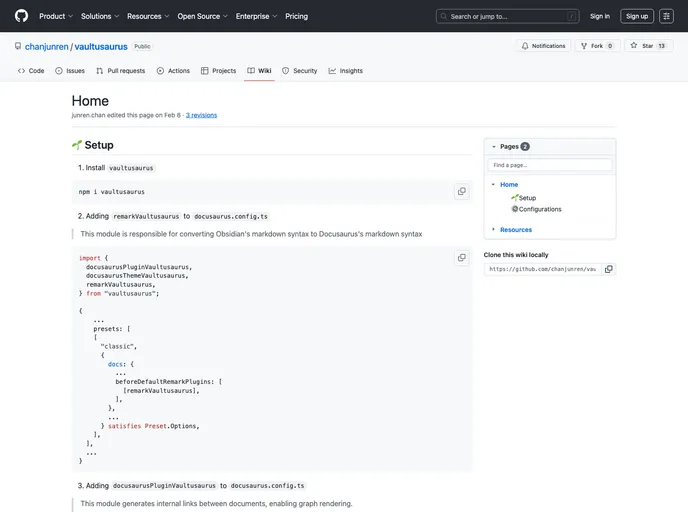
Overview
The Vaultusaurus plugin is an innovative tool designed to seamlessly integrate Obsidian vaults with Docusaurus. This plugin enables users to convert Obsidian’s unique markdown syntax into Docusaurus-compatible syntax, making it easier to create documentation and websites without losing formatting or links. It provides enhanced functionality for visualizing connections between notes, ensuring a more organized and accessible way to manage content.
What sets Vaultusaurus apart is its tailored approach. Initially built for personal use, it reflects the creator’s needs and preferences, but it also offers significant potential for other users who wish to improve their workflow in documentation and note-taking. With features aimed at simplifying complex markdown conversions and enhancing visualization, this plugin is a must-have for anyone looking to leverage the strengths of both Obsidian and Docusaurus.
Features
- Markdown Conversion: Effortlessly converts Obsidian’s custom markdown syntax to be Docusaurus-compatible, including support for special elements like admonitions.
- Internal Links Compatibility: Maintains the functionality of internal links within your notes, ensuring that navigation remains seamless after conversion.
- Tag Support: Easily integrates tags from Obsidian into Docusaurus, allowing for better organization and retrieval of notes.
- Graph View Rendering: Automatically identifies and visualizes connections between notes through internal links and tags, enhancing understanding of relationships within content.
- Local and Global Views: Supports both note-specific (local) and site-wide (global) graph views, catering to various organizational needs.
- User-Centric Development: Initially designed for personal use, showcasing a focus on practical applications and real user needs.
- Community Engagement: Encourages users of the plugin to share their websites and use cases, fostering a community-driven approach to improvement and feedback.


