


 Github Stars:
 Last Commit:
  Created:

Overview
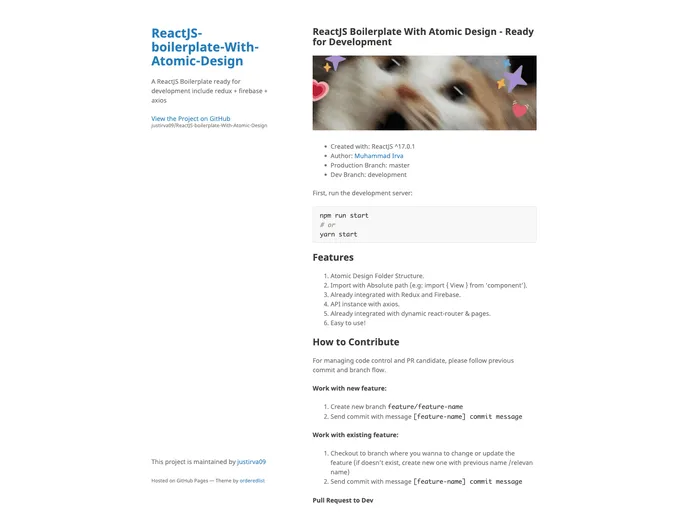
This article is an analysis of a ReactJS boilerplate with atomic design, created by Muhammad Irva. The boilerplate is ready for development and utilizes ReactJS version 17.0.1. It is equipped with features such as an Atomic Design Folder Structure, import with absolute path, integration with Redux and Firebase, API instance with axios, and dynamic react-router and pages. The purpose of this analysis is to provide a summary and understanding of the key features and installation process of this boilerplate.
Features
- Atomic Design Folder Structure: The boilerplate follows the Atomic Design methodology, organizing components into atoms, molecules, organisms, templates, and pages.
- Import with Absolute Path: Importing components becomes simpler through the use of absolute paths, such as
import { View } from 'component'. This eliminates the need for relative path declarations. - Integration with Redux and Firebase: The boilerplate is already integrated with Redux and Firebase, allowing for easy state management and real-time database functionalities.
- API Instance with Axios: Axios is included in the boilerplate, providing an easy-to-use API instance for making HTTP requests.
- Dynamic React-Router & Pages: The boilerplate is integrated with dynamic react-router and pages, allowing for seamless navigation and rendering of different pages based on the URL.
Installation
To install and set up the ReactJS boilerplate with atomic design, follow these steps:
- First, ensure that you have ReactJS version 17.0.1 installed on your system.
- Clone the boilerplate repository from the provided production branch (master).
- Navigate to the cloned directory in your terminal.
- Run the development server by executing the following command:
npm start - The development server will now be running, and you can access the boilerplate in your preferred web browser.
Summary
In summary, the ReactJS boilerplate with atomic design created by Muhammad Irva provides a solid foundation for developing ReactJS applications. Its key features, such as an atomic design folder structure, import with absolute path capability, and built-in integration with Redux, Firebase, and dynamic react-router, make it a convenient and efficient tool for developers. By following the provided installation guide, developers can quickly set up and start using this boilerplate for their ReactJS projects.


