


 Github Stars:
 Last Commit:
  Created:
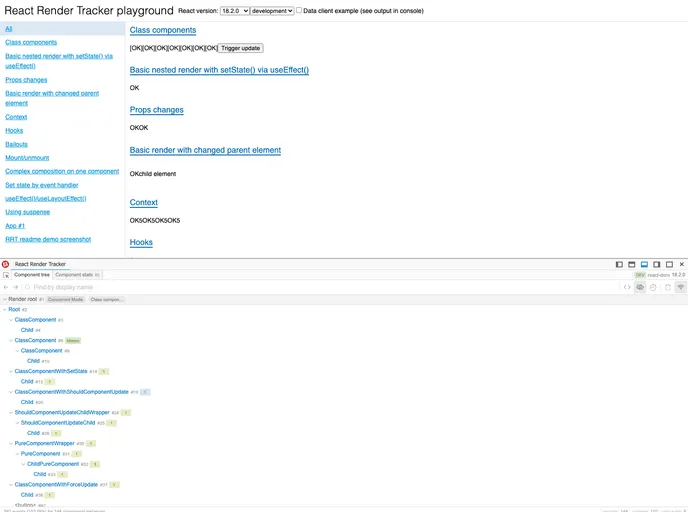
Overview
React applications can face performance challenges, especially when it comes to unintended re-renders. This is where the React Render Tracker (RRT) comes into play. Designed for React development environments, this tool helps developers identify performance issues by tracking the state of components over time. While it doesn’t replace React Devtools, it offers a complementary approach by focusing on changes within the component tree, making it an invaluable asset for any React developer looking to optimize their applications.
With RRT, you can visualize components’ states and the nuances behind updates and re-renders. This tool is specifically tailored for those who want a deeper dive into the behavior of their React applications, turning complex performance diagnostics into actionable insights.
Features
Component Tree History: Visualize the state of the component’s tree over time, including the ability to view unmounted components and their update counts.
Two Hierarchy Types: Choose between owner-based and parent-based component tree hierarchies, with owner-based being the default for improved update tracking.
Props Update Matrix: Access a matrix detailing props updates and update bailouts for selected fibers, offering insight into component behaviors.
Context Display: View the contexts used in fibers and the locations where hooks are reading context, enhancing your understanding of state management.
Consumers List: Identify the list of consumers for provider fibers, helping you navigate through component dependencies easily.
Hooks Analysis: Get details on the usage of useMemo() and useCallback(), along with recomputations for selected fibers, allowing for better performance tuning.
Event Logging: Track an event log for a selected component, organized by React’s batch of work (commit), showing changes in state, props, and context.
Self and Subtree Timings: Analyze rendering timings for selected components and their subtree, available through a simple toggle in the UI.
With these features, React Render Tracker empowers developers to optimize their applications effectively, ultimately leading to enhanced performance and user experience.


